
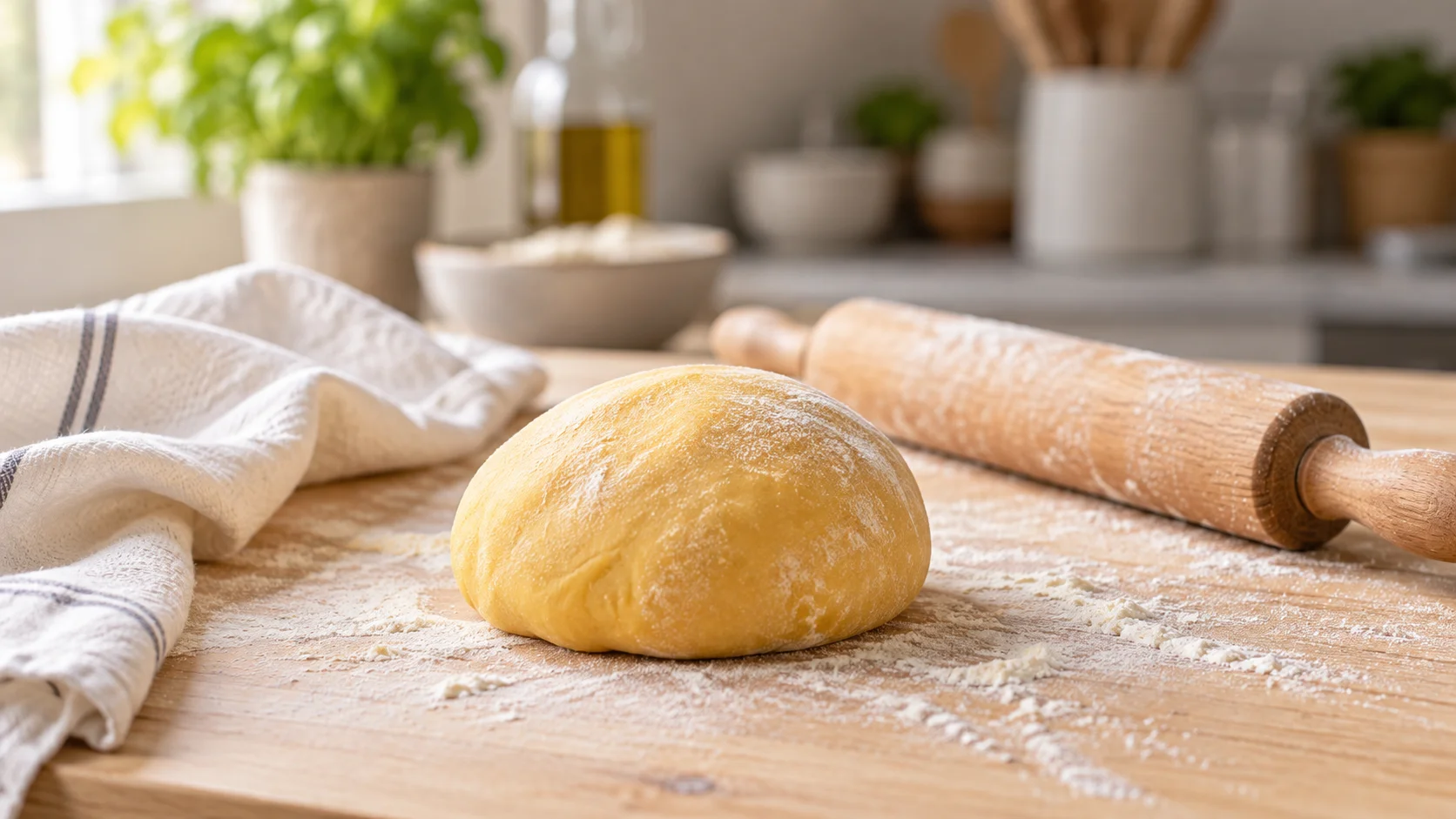
Ciao, I am Niccolò. As a Certified Sommelier and Italian Chef specialized in handmade pasta, I welcome guests from all over the world into our kitchen at Casa Pastrocchi every single day. When visitors arrive in Milan, they often ask me for the ultimate fresh pasta dough recipe to take back home to the United States. They want precise measurements, exact times, and rigid instructions. However, my grandmum Silvana taught me that true cooking happens through feeling, not just reading. While a written guide provides a wonderful foundation, it misses the crucial tactile cues that tell you exactly how the dough behaves.
Today I want to share the deep technique behind crafting the perfect pasta dough recipe, blending our family traditions with the science of hydration and touch. I will explain why learning in person changes everything.
The Science Behind a Homemade Pasta Dough Recipe
To build a solid foundation, you need high quality ingredients. For two people, you will need 200 grams of type 00 flour and two medium sized organic eggs. If you cannot find type 00, a premium all purpose flour works very well.
However, food science tells us that the interaction between these ingredients is highly dynamic. When the water content from the eggs meets the flour, proteins called glutenin and gliadin begin to form a complex network. This specific network provides the elasticity and structure necessary for rolling the pasta thin without breaking.
Here is where a written formula falls short. A printed recipe cannot account for the ambient humidity in your kitchen on any given day. Ambient humidity drastically affects how much moisture your flour can absorb. On a very humid day, the flour is already saturated and requires less liquid, while on a dry winter day it will demand much more. This is exactly why rigid weight measurements can sometimes fail you, forcing you to rely entirely on your senses to achieve the ideal hydration level.
Reading the Tactile Cues Through Your Hands
When we teach in our home, we focus on transferring knowledge through sensory feedback. Modern neurological studies confirm that the tactile sensory system helps develop fine motor skills and sensory awareness far better than visual or auditory processing alone. When you touch different textures repeatedly, your brain builds a physical memory of the task.
Recognizing When the Dough is Ready
The kneading process is where this physical memory becomes vital. You start by making the classic flour fountain on a wooden board, breaking the eggs into the center, and whisking them gently. As you slowly incorporate the flour from the edges, you switch to using your hands.
You must push the dough away with the heel of your hand, fold it back, and rotate it. A book might tell you to knead for ten minutes, but your hands will tell you the absolute truth.
You must look and feel for these specific tactile cues
- The surface transforms from rough and shaggy to completely smooth and uniform.
- The texture feels highly elastic and firm, but never rock hard.
- The dough stops sticking entirely to your fingers and the wooden board.
- When you press it lightly with one fingertip, it slowly bounces back.
The Secret Ingredient of Resting Time
Once the kneading is complete, you must resist the urge to roll it out immediately.
Why Gluten Needs to Relax
You need to wrap the dough tightly in plastic wrap or cover it with a slightly damp kitchen towel and let it rest for at least thirty minutes at room temperature. Resting is a scientific necessity. It allows the moisture to distribute evenly throughout the entire starch matrix. It also gives the newly formed gluten network time to relax, which makes the dough much more pliable. If you skip this resting time, the dough will shrink back aggressively and tear under the pressure of the rolling pin.
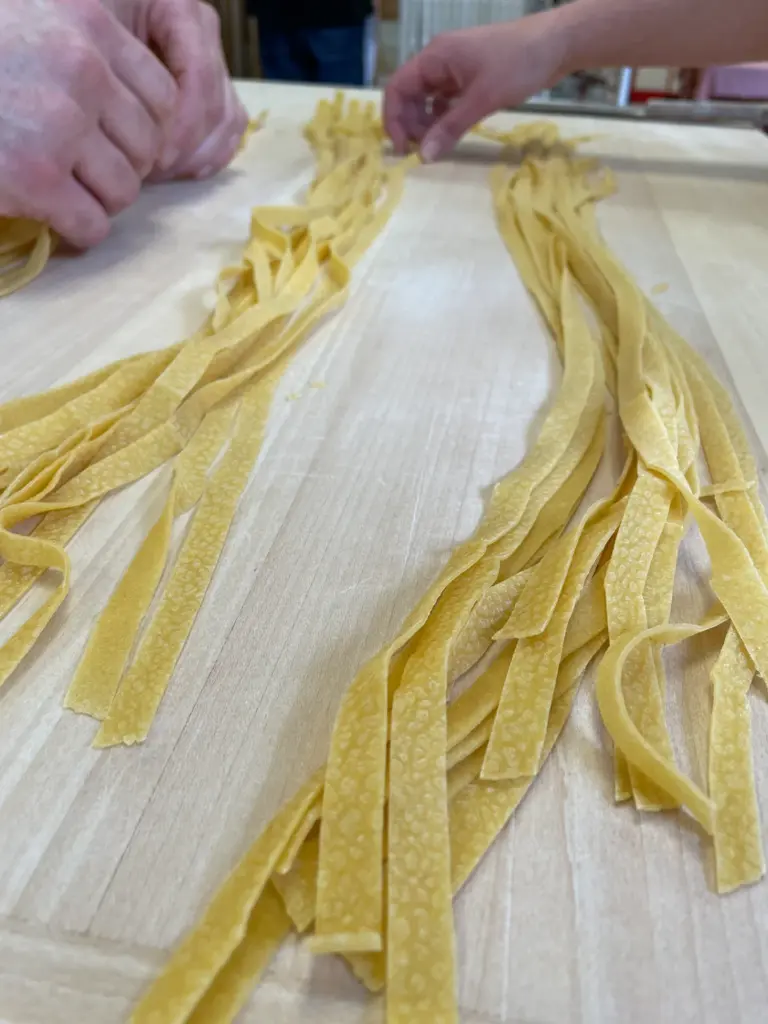
A Step by Step Guide to Your Daily Practice
To help you visualize the entire workflow, here is the basic sequence we use every day.
- Pour the flour onto a wooden surface and shape it into a wide crater.
- Crack the eggs inside and mix gently with a fork.
- Incorporate the flour gradually until the mixture thickens.
- Knead firmly with your hands until the ball is smooth and elastic.
- Cover the dough and let it rest for a minimum of thirty minutes.
If the dough misbehaves, trust your hands to fix it. If it feels too dry, add a few drops of warm water. If it feels too sticky, sprinkle a tiny pinch of extra flour.
Why Learning in Person Changes Everything
Trying to interpret words like smooth or sticky from a page can be extremely frustrating for beginners. When you learn in a real kitchen, you can touch a perfectly hydrated dough to understand exactly what it feels like.
We created Casa Pastrocchi to be a safe haven where people genuinely relax and connect through food. We want you to feel confident making fresh pasta for the rest of your life. If you are planning a journey to Milan, we invite you to book a private cooking class with us. We will put on our aprons, pour a great glass of Italian wine, and teach your hands.