
Ciao, I am Niccolò. As an Italian Chef and Certified Sommelier, I welcome travelers from all over the world into our kitchen at Casa Pastrocchi, located in the heart of Milan. Many of our guests arrive from the United States with a deep curiosity about Italian cooking. They often ask me why our homemade dishes taste so vastly different from what they prepare back home.
The secret always lies in the raw materials. In our tradition, we do not mask our food with heavy spices; we elevate the primary ingredients. If you are planning to travel to Italy or join our private hands-on pasta making class, understanding our ingredients will transform your culinary perspective.
Today, we will explore the science and tradition behind 00 flour, semolina, eggs, and water, so you know exactly how to craft the perfect dough.
Why Do Italian Chefs Use 00 Flour Instead of All-Purpose Flour?
Italian chefs prefer 00 flour for egg pasta because its ultra-fine, powder-like grind and ideal protein content (10% to 12%) create a silky, tender dough. It develops just enough gluten to stretch beautifully into paper-thin sheets without becoming rubbery or snapping back.
Flour is the absolute beating heart of every pasta recipe. Its quality dictates the elasticity, flavor, color, and texture of your final plate. While home cooks in the United States often rely on a single type of wheat for all their baking needs, in Italy, we carefully select our milled grains based on the specific culinary result we want to achieve.
What Does “00” Mean in Italian Flour?
In Italy, “00” (Doppio Zero) refers to how finely the wheat is milled and how much bran has been removed—it does not indicate the protein percentage. The scale runs from 00 (the most refined, talcum-powder texture) all the way to Type 2 (the coarsest, rustic whole grain).
Type 00 flour is milled so finely that it boasts a maximum ash content of just 0.55%. This extreme purity means there is zero bran in the mix, which prevents your egg pasta dough from oxidizing and turning an unappetizing grey color as it rests.
Chef’s Tip for US Shoppers: Not all 00 flours are the same! Avoid high-gluten “00 Pizza Flour” (which has a high “W index” of 260–300). If you use pizza flour for pasta, the strong gluten network will fight back and shrink when you try to roll it. Look for a softer “all-purpose” or pasta-specific 00 flour (W 180–220).
00 Flour vs. Semolina: When Should You Use Each?
Use 00 soft wheat flour with eggs for delicate, thin pasta shapes like tagliatelle, pappardelle, and stuffed ravioli. Use coarse durum wheat semolina with warm water for firm, rustic, egg-free shapes like orecchiette, cavatelli, and rigatoni.
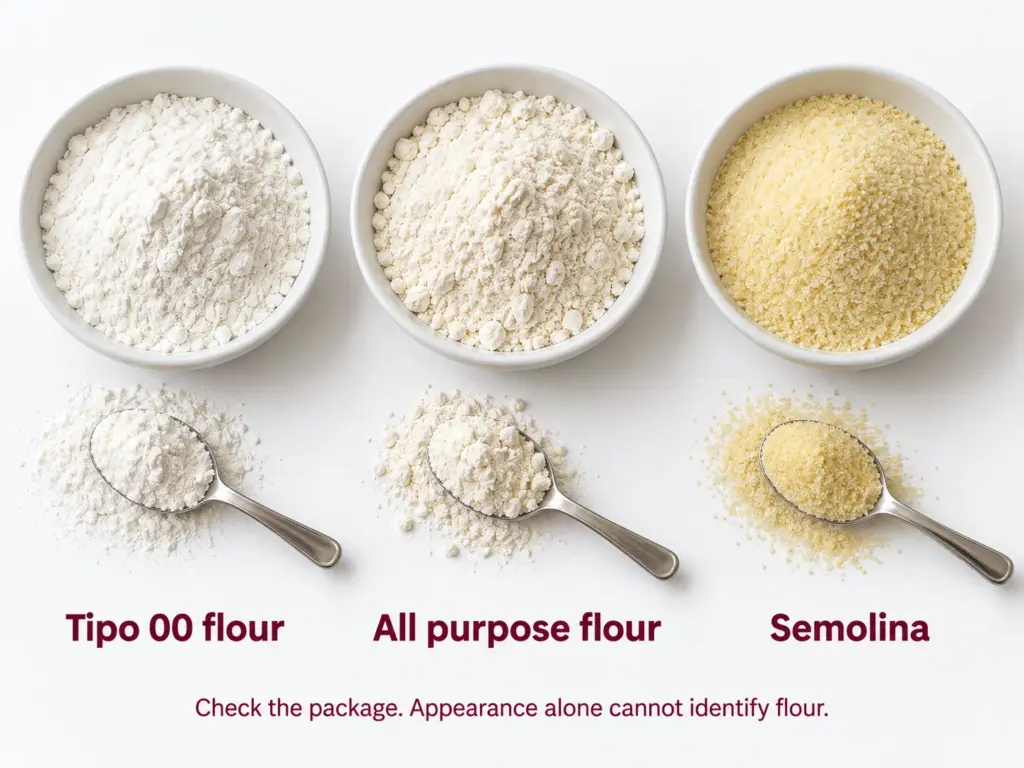
Italy is geographically and agriculturally diverse, which is directly reflected in our two main families of fresh pasta:
- Northern Italy (The 00 & Egg Tradition): Regions like Emilia-Romagna and Lombardy rely on soft wheat farming and chicken breeding, which historically gave birth to rich, velvety egg pasta.
- Southern Italy (The Semolina & Water Tradition): Southern regions feature a warmer, drier climate ideal for hard durum wheat, leading to a resilient tradition of egg-free pasta made solely with semolina and water.
Comparing Textures and Results
To help you choose the right approach for your next meal, here is exactly how the best flour for pasta changes the final experience in the mouth:
| Flour Type | Wheat & Grind | Protein % | Best Dough Ratio | Resulting Texture | Ideal Pasta Shapes |
| Italian Tipo 00 | Soft wheat, ultra-fine (talcum-like) | 10% – 11.5% | 100g flour + 1 medium egg (~55g) | Silky, velvety, tender bite | Tagliatelle, pappardelle, ravioli |
| Durum Semolina | Hard durum wheat, coarse & golden | 13% – 14% | 100g semolina + 50g warm water | Firm, chewy (al dente), porous | Orecchiette, cavatelli, trofie |
| US All-Purpose | Blend of hard/soft wheat, medium grind | 10% – 12% | 100g flour + 1 egg + 1 tsp water | Softer, less elastic, absorbs sauce slower | Beginner substitute for egg pasta |
Traditional Pasta Dough Recipes: Ratios and Rest Times
Whether you are using eggs or water, hydration and resting time are critical. Always let your dough rest wrapped in plastic wrap at room temperature for 30 minutes before rolling. This allows the flour to fully hydrate and the gluten to relax.
Crafting the Perfect Egg Pasta (00 Flour) The fine grind of 00 absorbs the liquid egg fully to create a tender dough.
- The Golden Ratio: 100 grams of 00 flour (approx. 3.5 oz / ¾ cup) to 1 medium whole egg (approx. 55 grams).
Building a Semolina Flour Pasta Dough Recipe If you want to create a plant-based, egg-free dish, this dough relies entirely on the high-protein structure of the hard durum wheat.
- The Golden Ratio: 100 grams of semolina (approx. 3.5 oz / scant ¾ cup) to 50 grams of warm water (approx. 1.7 oz).
What Is the Best Substitute for 00 Flour in the US?
Unbleached all-purpose flour is the best beginner substitute for 00 flour in the United States. All-purpose flour usually contains 10 to 12 percent protein, which is enough to build the necessary gluten network for pasta making.
However, because the grind is coarser than Italian 00, the result will be noticeably softer and less silky than a true authentic Italian dough. For the absolute best results, look for specialty grocers or online retailers that import authentic European-milled flours.
Taste the Difference at Casa Pastrocchi in Milan
Reading about hydration and protein content is fascinating, but feeling the dough transform under your own hands is an entirely different experience. We created Casa Pastrocchi to share this sensory magic with you.
When you join our private cooking class in Milan, we will guide you through the tactile differences between these incredible ingredients. You will learn to knead, shape, and cook authentic recipes from scratch. Finally, we will sit down together at our table to enjoy your creations, paired with the perfect Italian wine. We cannot wait to share our home with you.
Frequently Asked Questions About 00 Flour Pasta
Can I make pasta with 100% 00 flour? Yes, absolutely. 100% 00 flour is the traditional standard for fresh Northern Italian egg pasta like tagliatelle and ravioli. It yields the silkiest, most delicate texture possible.
Why does my 00 pasta dough shrink when I try to roll it? You are likely using “00 Pizza Flour.” Pizza flour is milled finely but comes from high-protein wheat designed to create intense, stretchy gluten for pizza crusts. For pasta, always use a lower-protein, softer 00 flour.
Is 00 flour lower in gluten than regular flour? No, 00 flour is not necessarily lower in gluten. Its protein content (around 10-12%) is very similar to US all-purpose flour. The difference is the quality of the gluten—it is softer and more extensible, making it easier to roll out into thin sheets.
Can I mix 00 flour and semolina together? Yes. Many chefs use a blend (often 70% 00 flour and 30% semolina) for egg pasta. The 00 flour provides a silky texture, while the semolina adds a rustic “bite” and helps the pasta grip heavy sauces better.